—
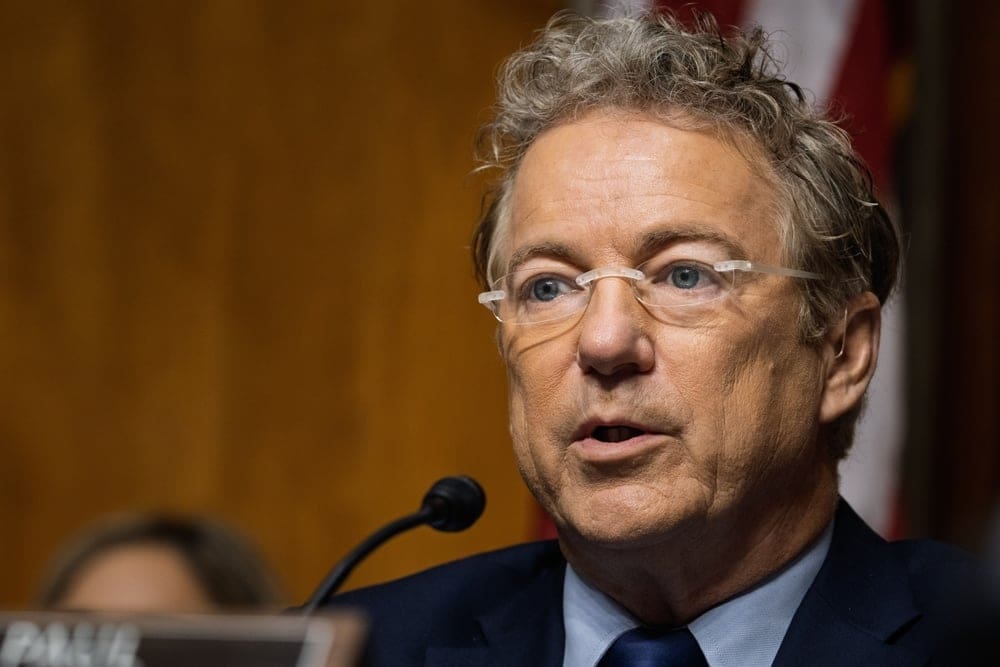
Sen. Rand Paul (R-Ky.) said the United States is “worse off” nearly five months after President Donald Trump launched the Iran war, pointing to an increasingly militarized Strait of Hormuz, rising energy prices and the failure to convert battlefield gains into a lasting agreement.
Paul Says War Left America Worse Off
“I think the Iran war has not been a success,” Paul told reporters Wednesday on Capitol Hill. “I think by any objective measure we’re worse off than we were before the war.”
Paul has repeatedly supported congressional efforts to withdraw U.S. forces from the conflict.
“If you look at the militarization of the Strait of Hormuz, that’s never happened before,” he said. “There’s not an easy way to un-militarize the strait.”
Hormuz Crisis Sends Energy Prices Higher
Before the war, roughly one-fifth of global oil supplies moved through Hormuz. Renewed fighting pushed the national average gasoline price to $4.003 a gallon Monday, more than 30% above its level when U.S. and Israeli strikes began in late February.
Brent crude climbed nearly 5% on Thursday to $98.64 a barrel, while U.S. crude reached $90.70 after Iran tightened its control over Hormuz and Yemen’s Iran-backed Houthis attacked two Saudi oil tankers in the Red Sea.
The Houthi assault threatens another major trade route through the Bab el-Mandeb Strait. Around 12% of world trade and one-quarter of container traffic normally pass through that waterway, according to a report by the Associated Press.
Failed Diplomacy Raises Political Costs At Home
“You could argue we have some leverage because we defeated them militarily,” Paul said, “but so far we haven’t seen the advantage play out in negotiations.”
The ceasefire collapsed in July. Daily strikes have resumed, while the war has cost the United States $37.5 billion, killed 18 service members and wounded roughly 430, Reuters reported.
Paul said voters primarily care about living costs and acknowledged that “some” inflation is related to the war. “I’m opposed to the war on many levels, but I’m also opposed to more deficits,” he said. Asked whether Republicans could face a backlash in November, Paul indicated that it was likely.