—
Senate Republicans are moving with haste to replace the head of the government’s most powerful watchdog before they surrender power to Democrats next year.
The Homeland Security and Governmental Affairs Committee on Thursday morning scheduled a confirmation hearing for Nov. 19 for the Government Accountability Office leadership position, though it did not disclose who the nominee would be and the White House has not yet formally submitted a name.
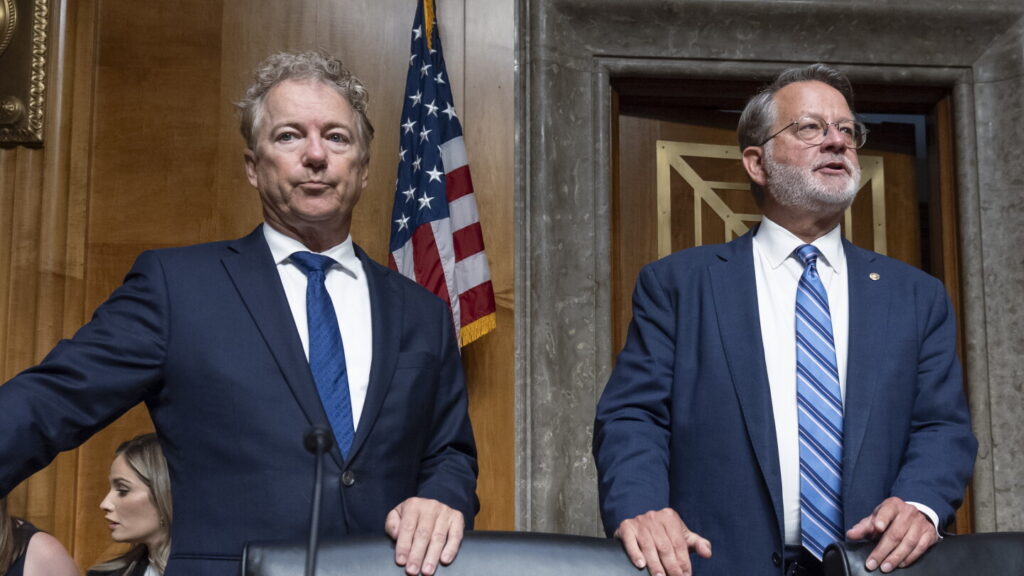
Sen. Rand Paul (R-Kentucky), the de facto head of the statutory commission required to submit candidates to lead the GAO, on Wednesday said lawmakers had less than 24 hours to propose names for the role, according to Senate Democrats.
Paul reached out to Democrats Wednesday afternoon and gave them until 8 a.m. the following morning to submit candidates, according to an aide to Sen. Gary Peters (Michigan), the top Democrat on HSGAC, though Democrats declined to do so as they did not want to legitimize the process.
Paul had not previously convened the commission, The Washington Sun reported last month. The top GAO job has sat vacant since Gene Dodaro’s term expired at the end of 2025.
Democratic leadership and top oversight members in both chambers blasted the expedited timeline, accusing Republicans of creating a “sham” process designed to allow the White House to move forward with its preferred candidate. The bipartisan congressional commission Paul is leading must, by law, send at least three candidates to the president to consider for nomination for the GAO role.
“This is clearly a sham to enable President Trump to appoint a handpicked nominee to lead Congress’ watchdog,” the Democratic leaders said in a joint statement. “We cannot allow President Trump to install a fox in the henhouse at an agency Congress relies on to provide independent, nonpartisan oversight, and expose waste, fraud, and abuse across the Trump Administration.”
The lawmakers, including Senate Minority Leader Chuck Schumer and House Minority Leader Hakeem Jeffries, noted that the last GAO vacancy led to a yearlong, bipartisan process. This time around, they said, the commission has yet to interview anyone.
Paul’s office did not immediately respond to a request for comment. Paul reached out to Democratic committee leaders with his abridged request for candidates, the HSGAC aide said, but did not contact other members on the GAO nomination commission, including House leadership.
The Sun previously reported the White House had floated to Senate Republicans the potential for one of its own top aides, Office of Management and Budget Deputy Director Eric Ueland, to serve in the role. Under Ueland and OMB Director Russ Vought, the administration has directed government spending and workforce changes that the GAO has on several occasions deemed illegal and detrimental to the functioning of government.
The search for a new GAO leader comes at a perilous time for the watchdog agency and its relationship with Congress. GAO is facing pressure from Capitol Hill to exercise its power to sue the Trump administration over what the agency itself has labeled illegal budgetary gimmicks, like impounding billions of dollars in congressionally approved funds over the last two years.
A post-Watergate law prohibits an administration from withholding congressionally appropriated funds for policy reasons. The law gave GAO the authority to sue an administration that improperly refuses to spend money, and recent court precedent has suggested only GAO has the authority to bring such a challenge.
If the White House places one of its own officials into GAO leadership, it could end any threat of a lawsuit or upend the watchdog agency altogether. Both the first and second Trump administrations have clashed with Congress’ watchdog, and Vought has suggested the GAO should not exist. Vought issued guidance to agencies last year directing them to not be overly deferential to GAO.
“Every Member of Congress who values independent oversight and good stewardship of taxpayer dollars should call this out for what it is – a transparent effort to ram through another Trump crony at the 11th hour, and undercut Congress’ ability to conduct effective oversight of the Trump Administration,” the Democratic lawmakers said.
After the 10-member bipartisan commission sends names to the White House for the president’s consideration, he can request they come up with more candidates. The law does not explicitly require the president to choose from the commission’s list, though the White House has done so.