—
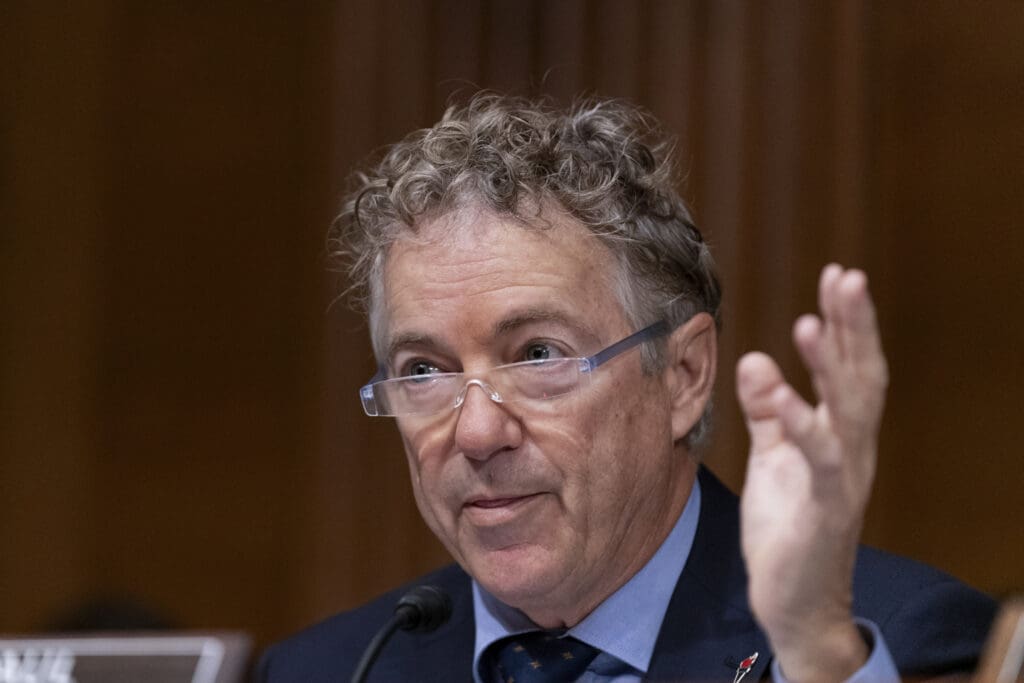
Since it ignores why we have deficits and debt in the first place, a balanced budget rule would vastly expand the size of the federal government. To understand why, we need only contemplate the excellent Sen. Rand Paul’s “Six Penny” government spending plan to bring the federal budget into balance within five years.
Contemplate first what would happen if Sen. Paul’s plan to shave six cents from every dollar of annually projected spending were signed into law. The law would coincide with a substantially expanded federal spending footprint.
Evidence supporting the above claim can be found in Sen. Paul’s more than valid lament that Congress has run up $39 trillion worth of debt over the decades. More than most in Washington, Sen. Paul knows that markets are wise, and they’re particularly wise for money.
Which means there’s no way Congress could run up all this debt absent a view in the U.S. Treasury marketplace (Treasuries are – by far – the most owned income streams in the world) that federal revenues in the future will dwarf those of the present. Considering soaring tax revenues in the future alongside Sen. Paul’s six penny plan, shaving six cents off every dollar of projected spending will be shaving six cents per dollar off of signficantly more dollars.
Sen. Paul observes that “big spenders being big spenders, the appropriators of both parties simply ignore the budget limits and spend what they want. The result – the deficit last year was just short of $2 trillion, and the overall national debt now exceeds $39 trillion.” Yes, precisely.
Of course, not asked enough is why ruthless debt markets don’t restrain U.S. appropriators in the way they do appropriators in countries not the U.S. The answer to the previous question can be found in the simple truth that the appropriators in other countries don’t have taxable access to the production of the most productive, entrepreneurial people on earth.
It all speaks to the problem of trying to solve a big government problem with spending cuts. No doubt doing so makes intuitive sense, but as the annual practice of appropriators ignoring “the budget limits and spend what they want” attests, enormous Treasury debt is a sad symptom of too much tax revenue now, and much more perilous, quite a bit more tax revenue in the future. Markets aren’t stupid as Sen. Paul knows, which means Treasury couldn’t borrow to fund the profligate ways of Congress unless there was a huge market for Treasury debt rooted in confidence about rising tax revenues in the future.
That’s why Sen. Paul could perhaps be persuaded that his six-penny plan wouldn’t just coincide with a bigger federal government, but a much bigger federal government. Not only would a balanced budget in five years amount to federal spending much greater than total spending today, any monies saved by the shaving of six pennies per dollar off the budget wouldn’t disappear, rather the savings would exist as fresh powder for Congress to dream up all new programs that will grow and grow. Wrongheaded as Social Security and Medicare are, at least their costs (along with interest on debt) limit appropriator grandiosity in the present.
It can’t be repeated enough that there’s no limiting government or shrinking it by focusing on balanced budgets, spending cuts, or both. To do so is to focus on symptoms, as opposed to the too-much-revenue problem that enables both excessive spending along with borrowing to expand what is already excessive spending.