—
This article is part of Upstream, The Daily Wire’s new home for culture and lifestyle. Real human insight and human stories — from our featured writers to you.
***
Are todays’ kids too badly behaved and poorly parented to share adult-oriented spaces, such as restaurants, weddings, and public transportation? Or do the childless adults demanding insulation from children’s antics as they sip their lattes, say their vows, or commute to work just need to get a grip and grow up already?
This is one of those Internet Discourses in which people are talking endlessly past one another, ignoring that both things are true: Yes, American parents absolutely need to raise kids who behave better, and, yes, childless adults who want to live without interruptions from crying babies or laughing preschoolers need to be ignored like the overgrown toddlers they are.
A couple things are happening at once here, confounding our collective ability to see and act on the nuanced reality.
One, lack of accommodation for children and families is real, and it becomes a self-fulfilling prophecy as fewer people have children and it becomes less common to see children out and about. It then also becomes less presumptive to take children into true and special consideration when making policy and other decisions.
Two, millennials, in mass thrall to gentle parenting and its lies about child development, have produced way too many badly behaved kids and not enough well-behaved ones. As a result, people see so little decent parenting in public that we’ve forgotten how varied even good child-rearing can look in relation to kids of different ages.
Children should be expected to exist in public
A few weeks ago, I took my four children — ages 11, nine, five, and two — into the kind of Center City Philadelphia coffee shop where one does not typically see children (let alone four of them in one family). No one bothered us, and everyone was kind to us. But we sure got a lot of stares. You know who did not provoke that level of interest? The several dogs on leashes inside this same establishment. Why? Because that eatery, given its clientele, is clearly more commonly frequented by canines than by kids.
Is this a problem, in and of itself? Of course not. But when children’s presence is alien to large and growing swaths of the population, an unfamiliarity with kids’ norms and needs takes root far beyond a few froufrou coffee shops.
Take our response to the coronavirus pandemic. Remember how bars opened ahead of schools in many places? Remember how our inane decision to close schools at all was ultimately a regressive tax on poor and working-class children? Remember how senior citizens and childless adults tended to oppose the reopening of schools more than anyone else? When children are largely hidden from view — when their needs are not apparent to people beyond their parents — the devaluation of their well-being is normalized.
For example, my sons have provoked their fair share of adult upset over the years for existing in pools. In one memorable incident, an elderly woman came over to yell at my then seven-year-old and five-year-old (and me) because they were jumping repeatedly into the pool, giggling and splashing — and had gotten her wetter than she wished to be. I responded charitably due to her advanced age, but one has to wonder what manner of society produces senior citizens who enter pools of their own free choice during a time designated “family swim” and then publicly react in anger when they encounter, um, water.
Such a curmudgeonly attitude toward children’s noise and play in shared spaces, and our acceptance of it, reflects values that are exactly backwards. Children’s needs should be our top priority; childless adults’ desires should be our last. In a healthy culture, any adult who said or behaved otherwise would thereby forfeit her right to any regard or respect.
Gentle parents are ruining America — and maybe your dinner
As I have written many times, gentle parenting — defined as prioritizing young children’s feelings over their behavior — has many unintended, negative consequences for kids and parents alike. A baseline of decreased tolerance for children in public spaces is one of them.
There are two things at play here. One is that too many of today’s kids really are abominably behaved. A few months ago, I took my five-year-old in for a sleep study. The veteran nurse who cared for him shared with me that she could no longer count on children his age to sit still while she prepared them for evaluation. Many won’t listen when their parents instruct them to sit still. Some kick, scream, or hit. A substantial percentage need to be pacified with screens in order to complete their appointments.
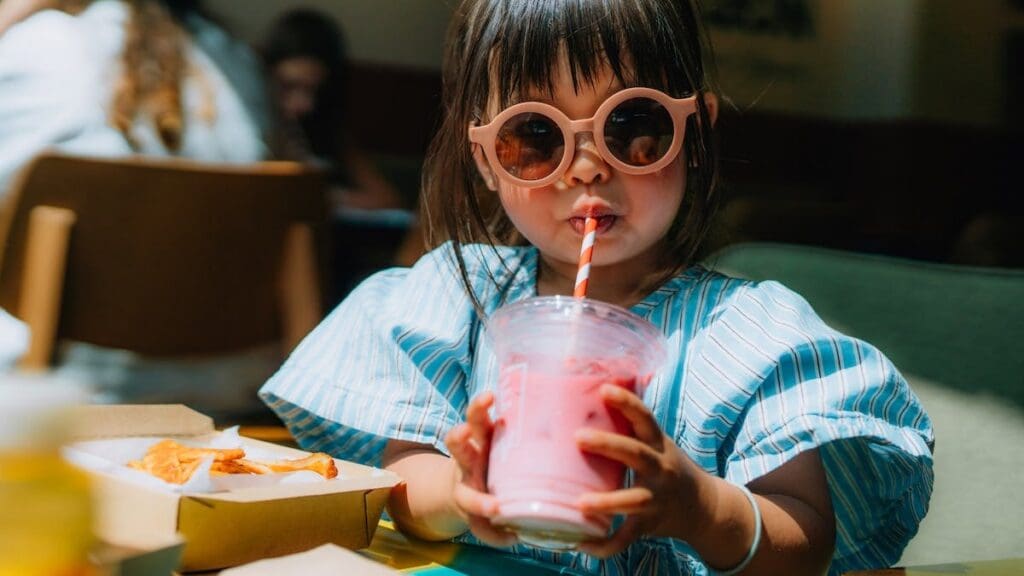
If you ever frequent restaurants, churches, or other public spaces where children are present, none of this will surprise you. Beleaguered parents weakly pleading with five-year-olds who don’t sit still to “make a better choice” over a plate of French fries at the local diner is common. Indeed, this kind of permissiveness and abdication cuts across enough demographic divides of class and political ideology that it’s no longer accurate to associate it only with those who profess “gentle parenting.” It is, per Hannah Spier, normative “millennial parenting.” This is a colossal and multifaceted problem that requires swift and thorough remediation.
That said, the other aspect of decreasing tolerance for children in public spaces is childless adults’ determination to denigrate whatever inconveniences them without regard to the context — in other words, to be gentle parented by society, including by children, themselves.
As Stephanie Murray has pointed out, the child throwing a tantrum at Target may actually have great parents. After all, he’s screaming because he isn’t getting what he wants, and that’s likely because the adult in charge isn’t giving in. Sure, the five or six-year-old screaming wildly outside the grocery store while his mom attempts to comfort him is almost certainly a gentle-parented disaster with overindulgent parents. But the two- or three-year-old screaming just as wildly? She usually isn’t!
Indeed, it’s the very parents who are willing to let their toddlers throw tantrums — in public and in private — who produce preschoolers who have long since stopped doing so. Children of such parents were told “no” constantly and consistently in toddlerhood, and they learned that tantrums neither changed “no” to “yes” nor garnered them any attention.
So, yes, it’s on parents to ensure that preschoolers are civilized into the ability to behave appropriately enough in adult-oriented spaces. But it’s also on the rest of society to have the maturity, decency, and grace to remember that the well-named “terrible twos” should not involve house arrest for young families. Moreover, to any right-thinking person, running and laughing kids are not an affront to public peace but the primary reason to preserve it. The dad of a crying toddler on an airplane or the mom of a grade schooler who accidentally drops some books with a thud at the library, for example, should garner genuine smiles and sincere sympathy from other adults, not scowls and eye rolls.
Frankly, we should all begin from a premise of gratitude to today’s parents for raising the next generation. After all, in this anti-child, anti-family ecology, that’s no longer a given.
***
Elizabeth Grace Matthew writes about books, education, and culture, including on Substack.