
—
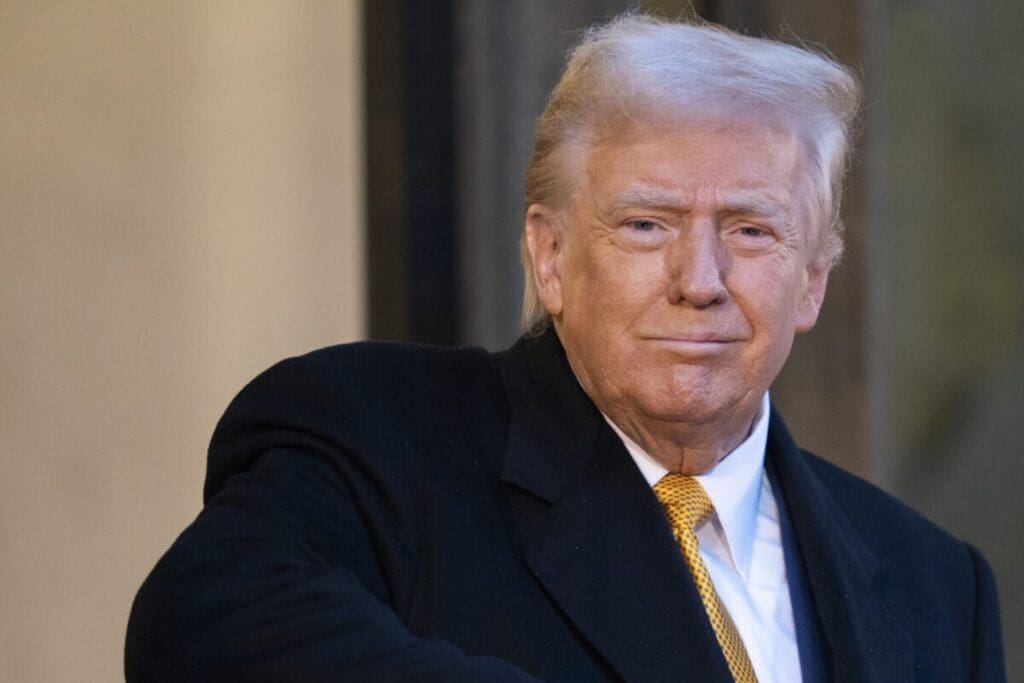
Waiting for the government to shed power and voluntarily reduce its intrusions into people’s lives can be an exercise in frustration, but gun owners are getting some welcome news from the feds. Through administrative action, litigation, and promises of legislation, the Trump administration is reversing some of the anti-gun policies implemented by the Biden administration and otherwise offering a little more breathing room for people who want to own, buy, and sell firearms.
‘Scrapping More Than Three Dozen Firearms Regulations’
“The Trump administration is scrapping more than three dozen firearms regulations, abandoning a crackdown on illegal sales, restoring gun rights to some people with mental illness, and loosening oversight of private weapons transactions,” Aishvarya Kavi of The New York Times reported over the weekend.
As is often the case in an age when much “law” involves administrative interpretations of deliberately vague statutes, many of the changes involve White House-directed reinterpretations by the Bureau of Alcohol, Tobacco, Firearms, and Explosives (ATF). I’ve reported on such changes in the past and the latest proposed reinterpretations appear even more substantial.
Unsurprisingly, given the newspaper’s track record on the issue, Kavi added, “in the view of critics and even some ATF veterans, the agency, in closely mirroring the demands made by gun owners and manufacturers to lighten their regulatory burden, is enacting changes at the expense of public safety.”
That may be the view of critics and former ATF enforcers, but relief is welcomed by gun owners and sellers who have come to assume that rules always get more restrictive, not looser. Among the proposed changes is one that would allow gun dealers to do background checks remotely and ship firearms directly to the buyers’ homes, so long as they’re in the same state. That would substantially reduce hassle and expense for consumers seeking specific firearms who currently must make long trips to distant dealers or else order a gun for an extra fee through a local dealer.
The ATF says it is also “revising regulatory changes it made to the definition of the ‘engaged in the business’ of dealing in firearms. The rule rescinds certain provisions of the definition of ‘engaged in the business'” that were adopted by the Biden administration.
The Biden-era interpretations turned many hobbyists selling personal firearms into potential felons if they didn’t get a Federal Firearms License (FFL). The Biden administration’s enthusiasm for strict enforcement of paperwork rules resulted in the death of Bryan Malinowski, executive director of the airport in Little Rock, Arkansas, and a gun collector. He was targeted at home by a pre-dawn ATF raid when agents decided he’d crossed the line from hobby sales to commercial transactions. Rather than send him a letter, they kicked in his door and started a lethal gun fight.
In 2024, a federal judge ruled against the broad Biden-era “engaged in the business” interpretation that criminalized many private sales.
The ATF also proposes eliminating the ban on stabilizing braces for pistols, as well as the definition of “bump stocks” as machine guns. The term “straw purchase” is to be clarified so that giving a firearm as a gift is less legally fraught. Also, mailing and personal transportation of firearms are to be eased.
Federal Challenges to State-Level Restrictions
While speaking recently at the Mack Trucks facility in Macungie, Pennsylvania, President Donald Trump also promised: “National right to carry. Yeah, we’re working on it,” to a cheering audience. Such a change, which would potentially allow Americans to carry concealed weapons across the country without complicated reciprocity agreements among states, requires congressional action.
Given that some of the most egregious restrictions on self-defense rights are inflicted on the public by state governments, it’s important that the federal government is suing Colorado, California, and Virginia. The Colorado litigation goes after a ban on standard-capacity magazines which take more than 15 rounds. California is in the crosshairs for its prohibition of popular Glock handguns, while Virginia drew the Justice Department’s ire for its new ban on so-called “assault weapons”—semi-automatic firearms with a military appearance. Denver has been separately sued for its own “assault weapons” ban.
“On April 10, I promised Governor Spanberger that we would sue Virginia if she signed this unconstitutional weapons ban into law. I keep my promises,” commented Assistant Attorney General Harmeet K. Dhillon of the Justice Department’s Civil Rights Division. “Law-abiding Americans should not have to live under threat of criminal sanction for simply exercising their Second Amendment right to possess arms owned by millions of their fellow citizens.”
Good News for Liberty, but More, Please!
While the Trump administration’s rhetoric and some of its actions are a welcome reversal of Biden-era hostility to self-defense rights, not everybody is convinced that the changes go far enough.
Gun Owners of America (GOA) warns that “ATF still treats everyday behavior by gun owners as suspicious: keeping a simple list of your firearms, reselling the same model within a short window, or even just offering to sell a firearm can be used as evidence that you are ‘engaged in the business’ without a license.” Instead of tweaking the last administration’s rule regarding what turns a hobbyist into a commercial gun dealer, GOA says “the rule must be rescinded in its entirety.”
The Firearms Policy Coalition (FPC) similarly cautions that the ATF isn’t fully implementing the U.S. Supreme Court’s Hemani decision, which found that laws denying gun rights to users of “controlled substances” are unconstitutional.
“The Supreme Court’s recent Hemani decision requires the agency to make additional changes to prevent unconstitutional disarmament of peaceable people,” commented FPC. “Even apart from the Second Amendment, Congress lacks constitutional authority to broadly disarm peaceable people under its Commerce Clause power—a position advanced by FPC and cited by Justice Thomas in his Hemani concurrence.”
It’s worth noting the Supreme Court will soon consider the constitutionality of “assault weapons” bans.
The Trump administration’s changes don’t constitute the full repeal of gun restrictions, which many owners and activists favor. Some of the revisions might be reversed by administrations to come via their own reinterpretations. But any reduction in authoritarian rules and regulations should be welcomed by all Americans.
The post Trump Administration Continues Push for Liberalized Gun Rules appeared first on Reason.com.