—
A sailor aboard the USS Abraham Lincoln sent a message home that his family passed to Stars and Stripes anonymously, fearing retaliation. “Our mental health and physical health is in danger. We need help.”
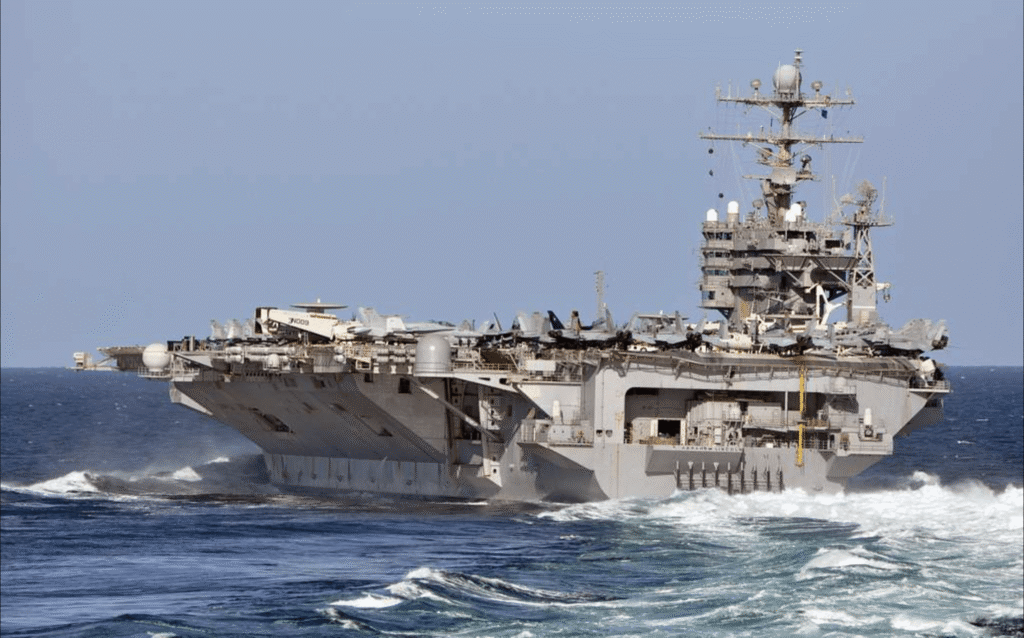
By the time that message surfaced, the Lincoln had been gone from San Diego since late November 2025, redirected from a routine Pacific cruise into a shooting war with Iran and kept at sea for nine months. Her roughly 5,000 sailors and Marines spent 208 consecutive days at sea—more than any carrier in the modern era—with only two brief port calls: Guam in December and Oman in June. One sailor told CNN in July he had not set foot off the ship at any point in 2026.
What families describe is a warship in a state of collapse. Reporting based on interviews with sailors, relatives, and recordings of meetings between families and Navy leadership documents mold in the showers, broken toilets, dead laundry facilities, and shortages of soap and toothpaste. Care packages have faced a backlog, and Navy leaders acknowledged it was difficult to move supplies from Bahrain to the ship due to the war—prioritizing food first, then hygiene items, then mail.
The human consequences arrived next. Navy Times and Stars and Stripes reported that multiple crew members attempted to go overboard. Annabelle Loma told Navy Times her husband tried to jump after repeated extensions and now sits on medical hold. “He’s scared,” she said. At a San Diego meeting where roughly two hundred family members confronted Navy leaders, one spouse said she had received a message from her husband that day saying he hopes he doesn’t wake up tomorrow.
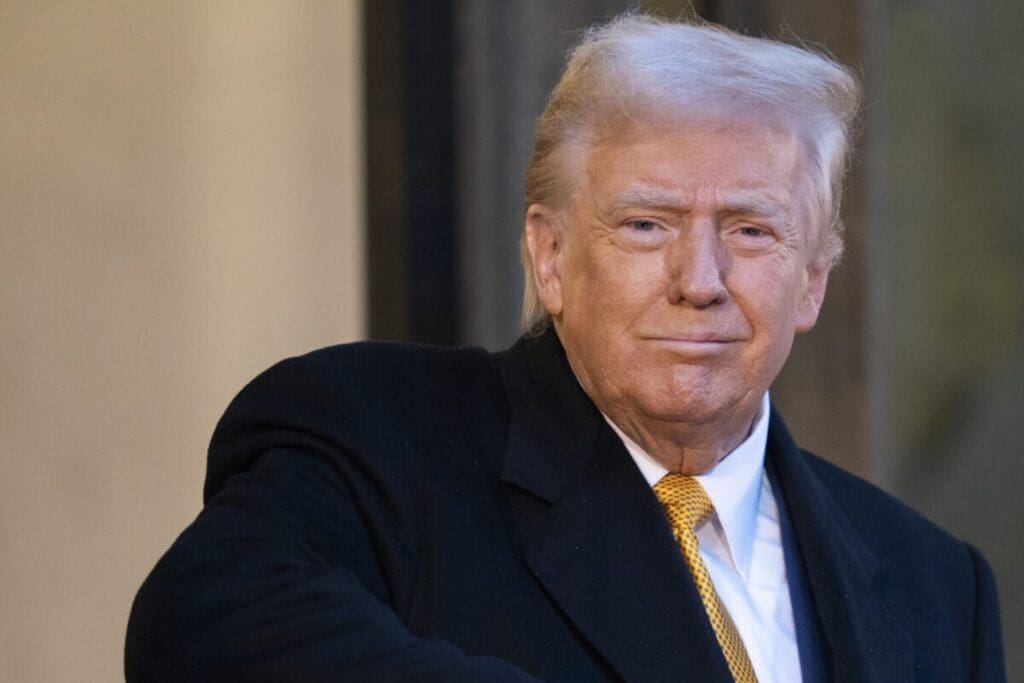
The civilian leadership had a different take on these allegations. Defense Secretary Pete Hegseth said the conditions had been “completely misrepresented” and that the “brave sailors of that strike group are very proud of their tough and historic mission. They embody resilience and excellence.” Acting Navy Secretary Hung Cao announced the ship was finally coming home while accusing the press of “trying to paint our warriors as victims,” conceding that a “small number of mental health cases were treated,” and insisting the deployment ran long “because the mission demanded it.” President Donald Trump said the deployment had not been “nearly long enough.”
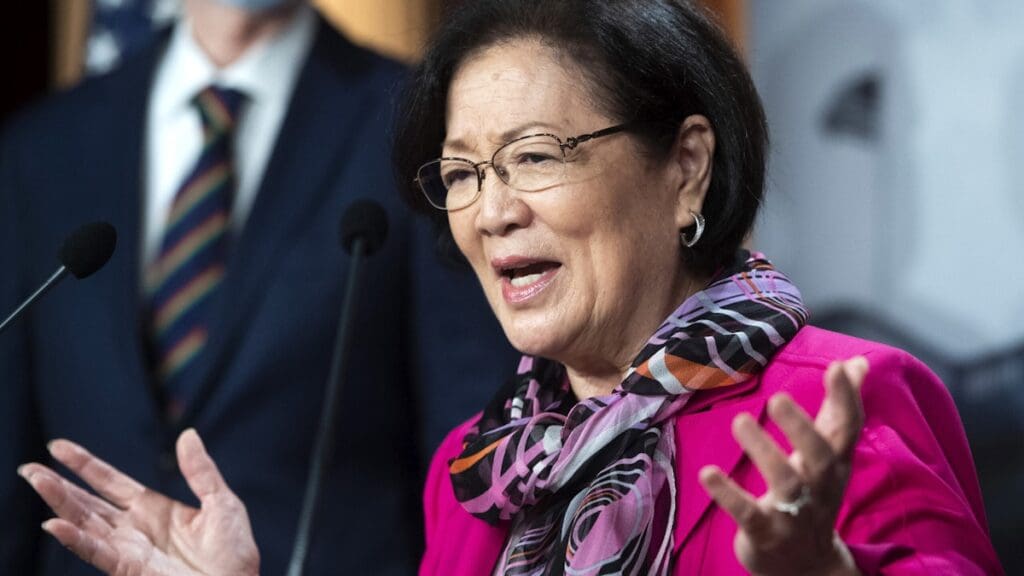
Congress was less impressed. In an August 15 letter to Hegseth signed by all thirteen Senate Armed Services Committee minority members plus Democratic leaders of the Appropriations Committee and its defense subcommittee—fifteen senators in total—lawmakers demanded answers about the Lincoln‘s continued deployment, citing “mounting evidence that conditions aboard the carrier have deteriorated to the point that the safety and wellbeing of its crew could be compromised.” They called the situation “a symptom of poor planning” by Hegseth and Trump, “exacerbated by the deeply unsound decision to start a war with Iran,” and added that “Open-ended deployments driven by an open-ended war have real consequences for our servicemembers, and we are seeing those consequences now.”
Between August 20 and 22, 2026, the Lincoln eventually pulled out of the Middle East after the USS George Washington arrived to relieve it of blockade duties around the Strait of Hormuz, ending its combat deployment there. The ship’s mission concluded after roughly nine months, during which it spent all 272 days at sea apart from a single-day stop in Guam in December and a brief resupply stop in Oman in July.
The Lincoln has now embarked on a roughly 13,000-mile transit back to its home port of San Diego, which officials estimate will take four to five weeks, meaning sailors still won’t touch home soil until sometime in September. Central Command publicly bid the carrier “fair winds and following seas” in a social media post marking its departure.
The carrier’s ordeal fits a broader strain on the Navy’s forces. The USS Gerald R. Ford returned in May 2026 after a record-breaking deployment—the longest for any U.S. carrier since Vietnam—having taken part in both the January operation against Venezuela and Operation Epic Fury. The USS Dwight D. Eisenhower spent nearly five months without normal port calls fighting the Houthis. The USS Harry S. Truman lost three strike fighters and collided with a merchant vessel across one deployment, and her commanding officer was relieved. In 2022, the USS George Washington absorbed a cluster of sailor suicides while in overhaul, after which Navy leadership admitted in a service-wide memo that “Collectively, Navy senior leadership, officer and civilian, let our standards slip—and in doing so we let our people down.”
All of this is happening inside a war Americans do not want. Reuters and Ipsos found 33% approval against 62% disapproval in late July, with nearly seven in ten Americans saying Trump has not clearly explained what the United States is trying to accomplish. Quinnipiac recorded 34% support and 60% opposition—its worst reading since it began tracking the conflict in early March—with 66% saying the war has not been worth fighting and 74% opposing the deployment of U.S. ground troops. Approval has never crossed 40% since the first strikes on February 28.
Here is where the comfortable assumption deserves examination. Americans tell themselves that discipline in the ranks is a settled question, that whatever else fractures in this country the military holds. The historical record says otherwise, and it says so repeatedly.
Article 94 of the Uniform Code of Military Justice makes mutiny a capital offense, defining it as refusing in concert with others to obey orders with intent to usurp lawful authority. The United States has invoked that concept more often than the myth allows. Sergeant William Walker of the 3rd South Carolina Infantry stacked arms in November 1863 over pay discrimination against Black soldiers, and a firing squad executed him on February 29, 1864. After the 1944 Port Chicago explosion killed 320 men, 258 Black sailors refused to resume loading ammunition under identical conditions and fifty were convicted of mutiny.
Those who continue to drink the Kool-Aid of American exceptionalism, clinging to the naive belief that a mutiny “can’t happen here” because of some inherent national immunity, are in for a brutal reckoning. By ignoring the rapidly degrading conditions aboard these carriers and the growing, justified resentment toward an unpopular war, the political establishment is inviting a collapse they cannot control. History is rarely a story of unbroken order; it is a series of tipping points, and the United States is currently accelerating toward one.