
—
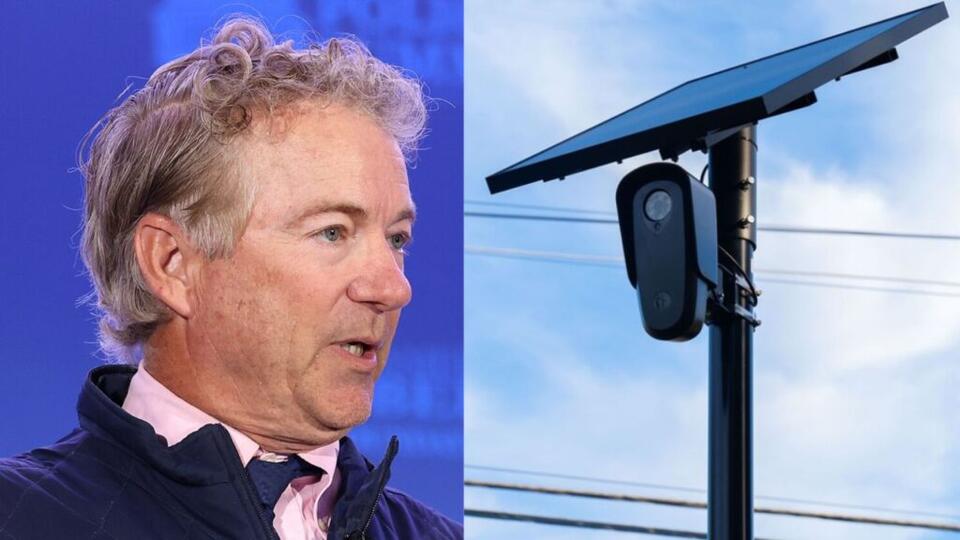
Sen. Rand Paul, R-Ky., said police misuse of Flock Safety’s license plate reader network raises Fourth Amendment concerns, responding to a Washington Post investigation documenting officers who used the cameras to track personal acquaintances without detection by their own departments. Paul’s post on X responded to a post from Young Americans for Liberty highlighting the report.
Paul: “Not to Mention a 4th Amendment Violation”
“Not to mention a 4th Amendment violation,” Paul wrote, responding to a post listing “invasion of privacy,” “no basic oversight” and “rampant abuse” as concerns raised by the Post’s investigation.
Post Investigation Found Departments Weren’t Auditing Officer Searches
The Post found that at least 69 police officials nationwide have been accused, charged with or convicted of misusing Flock’s license plate readers or similar systems for unauthorized purposes, and that in at least 15 of those cases, someone outside the department — including victims, activists or journalists — identified the misuse first. Using publicly available search-log data, Post reporters independently identified three police employees whose usage patterns suggested misuse; all three departments said they did not regularly audit officers’ searches, and the newspaper’s findings triggered investigations of all three employees and discipline of two.
Indianapolis Officer Searched Wife’s Plate Nearly 3,800 Times
In one case, the Post found that an Indianapolis police officer appeared to use Flock cameras to track vehicles associated with his wife and two personal acquaintances, conducting 3,759 searches over 10 months — an average of about 12 per day. Indianapolis Police Chief Tanya Terry acknowledged her department had no regular practice of auditing officer searches before the Post’s inquiry, calling it “a learning process for us.” The department suspended the officer without pay and is recommending termination.
Officer in Florida Charged With Felonies After Searching Wife’s Vehicle for Years
In Haines City, Florida, officer Christopher Goodson was charged with two felonies after Post reporters found he had searched his wife’s license plate repeatedly over nearly two years, despite neither his wife nor her vehicle ever being connected to a criminal investigation during that period, according to a police affidavit. Department spokeswoman Brooke Hart said Haines City had not audited Flock usage before the incident, calling it “an eye opener for us.”
Ohio Dispatcher Resigned After More Than 1,000 Searches of Five Plates
In Highland Heights, Ohio, a police dispatcher who had searched the locations of five license plates more than 1,000 times each had her Flock access revoked and resigned days after the Post’s report was published, according to the police chief. The department had no written Flock policy and had not conducted any audits before the Post’s inquiry.
Only 13 States Currently Require Usage Audits
According to the Post, only 13 states require law enforcement agencies to audit officers’ license-plate-reader searches. Flock has said it plans to make automated “abnormal activity” scanning a default feature for all customers, a tool the company said only about a third of its roughly 7,000 law-enforcement customers had turned on voluntarily as of its reporting. Indiana, where the Indianapolis case occurred, has no state law governing police use of license plate readers; state Sen. Aaron Freeman, a Republican, said following the Post’s reporting that lawmakers should examine the issue in the next legislative session, adding, “I don’t think we suspended the Fourth Amendment to the Constitution anytime recently.”
Departments That Adopted Audits Found Additional Misuse
After Joplin, Missouri, police began investigating an officer flagged through the public-records site Have I Been Flocked, they found he had violated department policy and no longer works there, according to a department release; the city now requires monthly Flock audits. Savannah, Georgia, police said that after enabling Flock’s automated audit tool, they discovered and terminated six employees, including four officers, for misuse.
Congress Has Multiple Competing Bills but None That Would Ban the Technology
Several lawmakers, primarily Republicans, have introduced legislation addressing automated license plate readers this year, though none would ban the technology outright. Rep. Tim Burchett, R-Tenn., introduced the Protection Against Mass Surveillance Act in July, which would bar federal agencies from purchasing or operating Flock-style systems and block state and local governments from using federal funds for them. Reps. Keith Self, R-Texas, Eli Crane, R-Ariz., and Andrew Clyde, R-Ga., have proposed requiring law enforcement to obtain a warrant before querying license-plate-reader data. Rep. Thomas Massie, R-Ky., has said he plans to introduce a bill withholding federal funding from jurisdictions that use the cameras.
Paul Has Not Introduced Senate Legislation on the Issue
Paul, a longtime advocate for Fourth Amendment protections against warrantless surveillance, has not introduced companion Senate legislation specifically targeting license plate readers, though he chairs the Homeland Security and Governmental Affairs Committee, which has jurisdiction over some federal surveillance policy matters.
Courts Have Been Divided on Whether the Technology Requires a Warrant
Legal experts remain split on whether license plate reader networks constitute a Fourth Amendment search requiring a warrant. Courts have generally held that photographing a plate visible from a public road is not itself a search, but a growing body of litigation has argued that the cumulative, searchable nature of nationwide camera networks changes that analysis. The U.S. Supreme Court ruled June 29 in Chatrie v. United States that a geofence warrant seeking a suspect’s cellphone location data constituted a Fourth Amendment search, extending its 2018 decision in Carpenter v. United States, which held that accessing historical cellphone tower records required a warrant. According to a Congressional Research Service legal analysis published on Congress.gov, the Chatrie ruling resolved a split among federal appeals courts — the Fourth Circuit had declined to extend Carpenter to geofence warrants, while the Fifth Circuit found geofence data raised the same “near perfect surveillance” concerns as the cellphone records at issue in Carpenter. The Supreme Court’s ruling did not directly address license plate readers, but privacy advocates, including the ACLU, have argued the same reasoning should extend to searchable ALPR databases; the ACLU filed a Fourth Circuit amicus brief in April making that argument in a separate case.
Flock Says Fixed Camera Images Differ From Continuous Tracking
Flock has argued in its own public materials that its cameras capture discrete, point-in-time images at fixed locations rather than continuously logging a vehicle’s movements, distinguishing the technology from GPS tracking or cellphone location data that courts have found more clearly implicates Fourth Amendment protections.