—
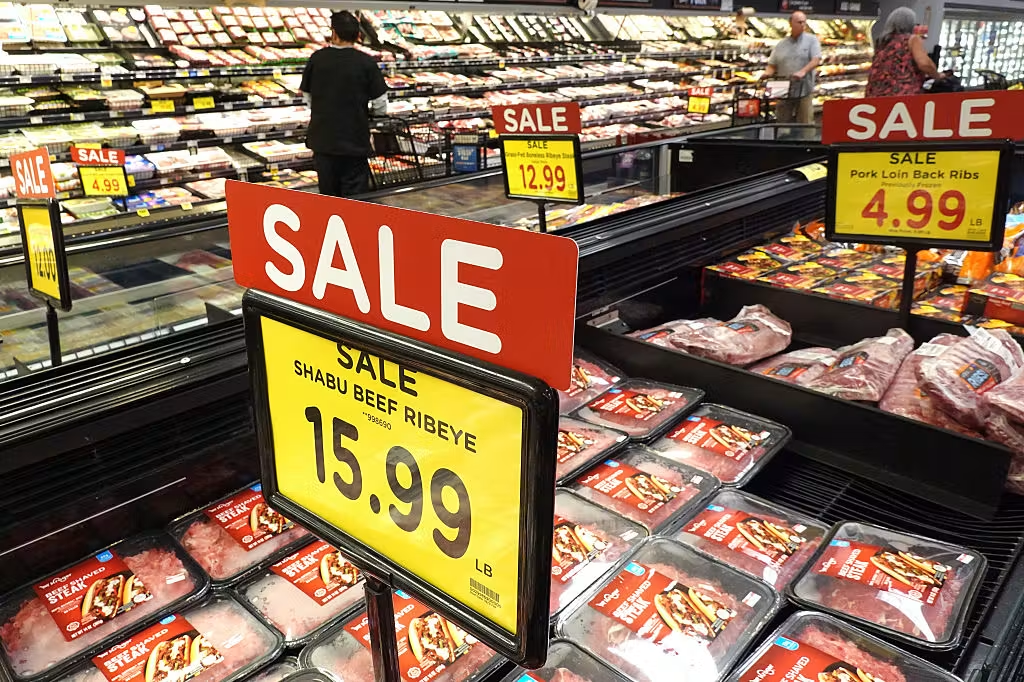
Year-over-year inflation fell for the first time since January, dropping down to 3.5% in June, according to data released on Tuesday by the Bureau of Labor Statistics.
It was the steepest monthly drop since April 2020, when prices fell 0.8% during the onset of the COVID-19 pandemic. Consumer prices fell 0.4% in June after rising 0.5% in May.
The decline beat expectations, with analysts predicting a 0.4% decrease from May’s 4.2% annual rate. Instead, the June report posted 0.7 percentage point drop from May’s number. The cooler numbers were driven primarily by lower energy costs as oil prices dropped amid easing tensions in the Middle East. After rising for months, energy prices fell 5.7% in June. The metric rose by 3.9% in May, 3.8% in April, and almost 11% in March.
Tensions in the Middle East began rising again over the past week, however, sending oil prices above $86 a barrel, the international oil benchmark’s highest price in the last month.
Shelter costs increased by 0.1% in June, which was the smallest monthly increase since January 2021. Food rose 0.2% last month, keeping its pace from May. Recreation saw an uptick in June rising half a percent, but costs for car insurance costs and medical care both decreased. The S&P 500 and the Nasdaq-100 futures jumped following the positive inflation report.
The better-than-expected inflation report decreased the chances that the Federal Reserve will increase interest rates this year, but rising tensions and now oil costs have left traders uneasy.
“Tuesday’s weaker-than-expected CPI print suggests the inflation surge driven by the Iran war is fading, but this may just be a temporary relief as tensions have escalated in recent days,” Skyler Weinand, chief investment officer at Regan Capital told CNBC. “The weaker inflation data likely keeps the Fed on hold for now and reduces any rate hike odds, but we remind investors that almost every communication that has emanated from Chair [Kevin] Warsh during his short tenure so far has been hawkish.”
Warsh will lead his second Federal Open Market Committee (FOMC) meeting on July 28 to 29 after the central bank voted to hold interest rates at its June meeting. In a testimony to Congress Tuesday morning, Warsh told the room that the central bank has “no tolerance for persistently elevated inflation.” Inflation hasn’t reached the Fed’s 2% target since President Trump’s first term in office.